Equestrian buyer's guide
Buying a farm with a vet's eye.
I've walked these properties as an equine veterinarian for seventeen years. This is what I look at, and what I'd want you to know, before you buy a horse property here.
A listing tells you how many stalls there are. It rarely tells you whether a horse will stay sound and happy there.
When I tour a farm with you, I'm looking at the property through two sets of eyes: as your agent, protecting your investment, and as someone who has treated the injuries and illnesses that poor facilities cause. Use this guide as a checklist. I'll walk it with you in person.
This guide is general information. When I tour a property with you, I'm there as your real estate advisor, not as your horse's veterinarian. For a pre-purchase exam of a horse, use your own vet.
The land
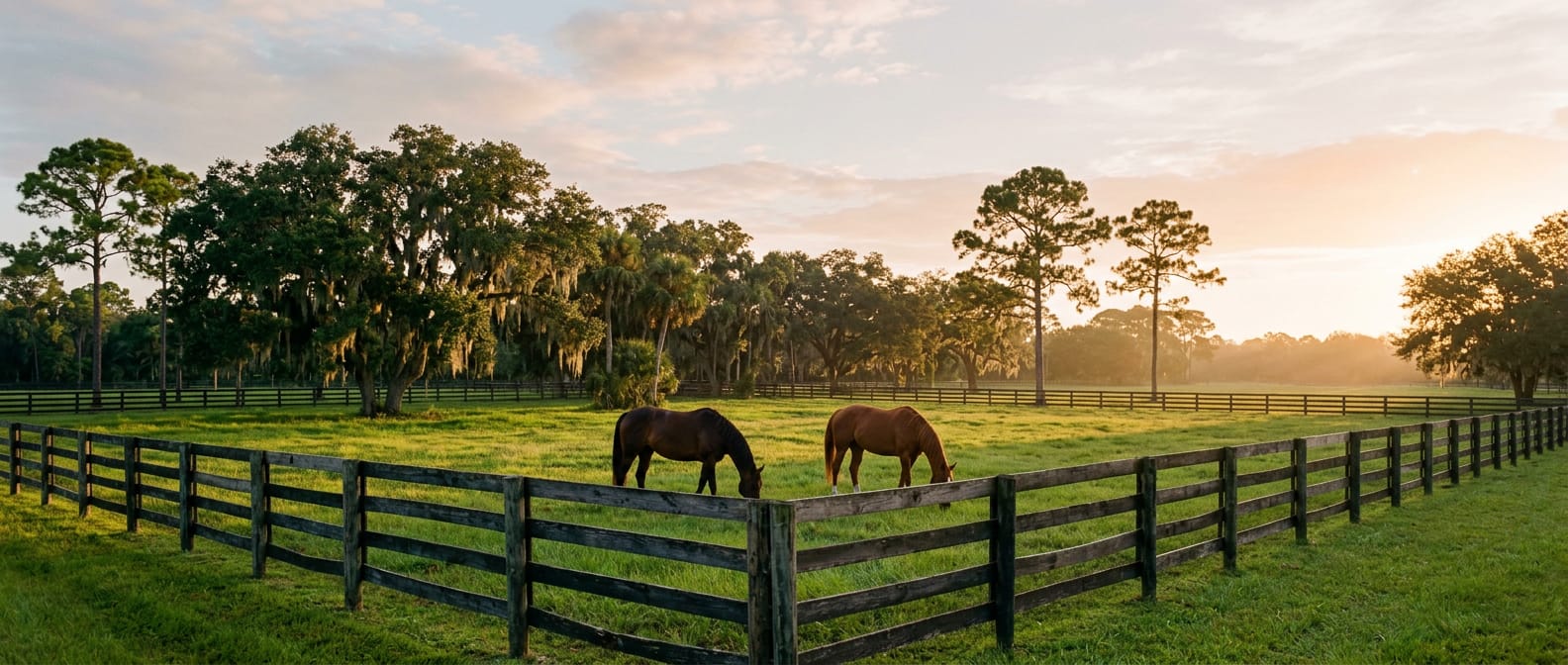
Everything starts with the ground. Florida's summer rains will show you a property's real character, so I look at it the way it behaves in July, not just how it photographs in January.
Drainage
Where water sits after a storm, how quickly paddocks dry out, and whether the barn sits high enough. Standing water means mud, hoof problems and insects.
Pasture
The grass that's actually growing, how much of the turnout is usable, and whether the acreage really supports the number of horses you plan to keep.
Shade and shelter
Mature trees, run-in sheds and airflow. Florida heat is a welfare issue, not just a comfort one.
What's growing
Plants that are toxic to horses can hide along fence lines and in wooded corners. It's worth a careful walk before you move a horse in.
The barn
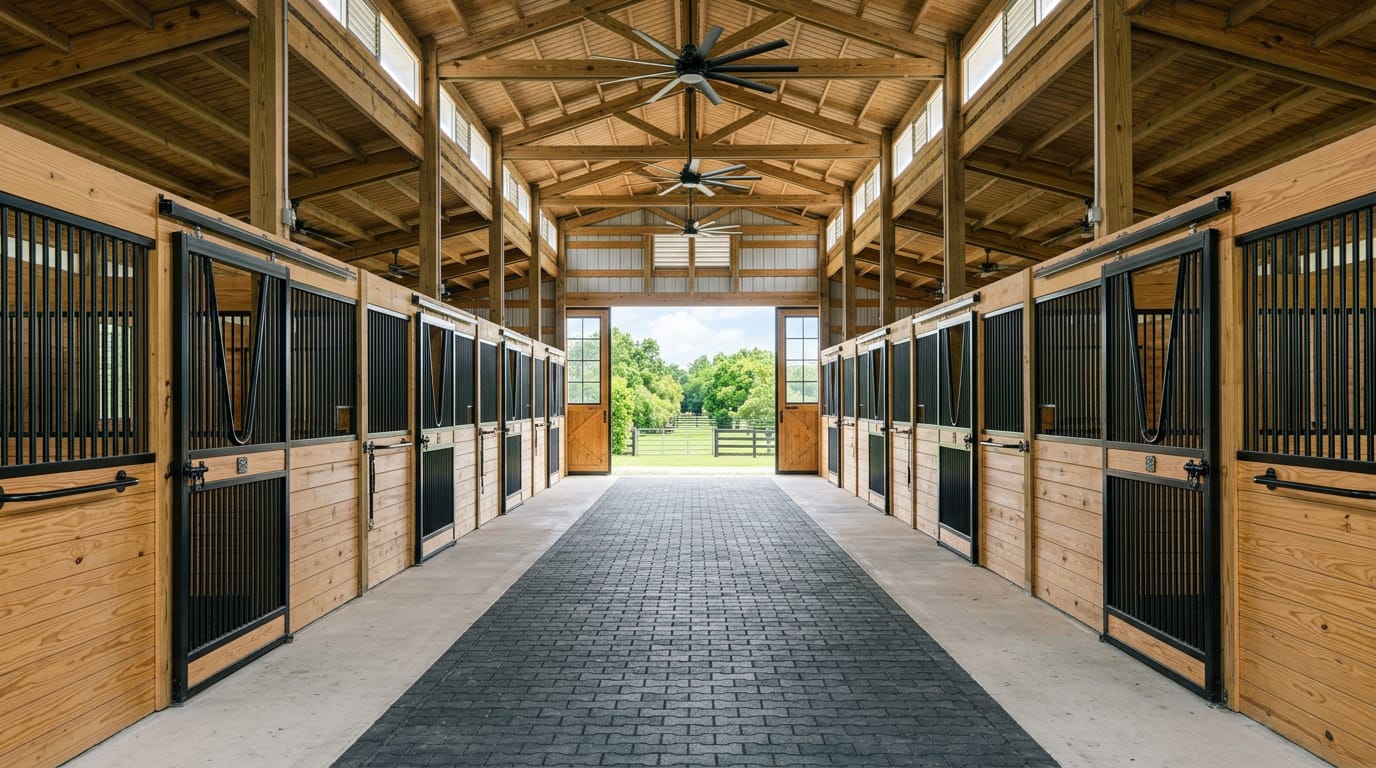
A barn tells you how a property has been run. I notice the details a vet notices, because I've spent years working in them.
Air and light
Orientation to the prevailing breeze, ceiling height, fans and open ends. A stuffy barn is a respiratory problem waiting to happen.
Stalls
Size, flooring, drainage under the mats, and stall fronts that are safe for a horse that kicks or rubs.
Construction
What it's built from, how it's held up through hurricane seasons, and the condition of the roof.
Working spaces
Wash rack drainage, feed and tack rooms that stay dry and rodent-free, and space for a farrier and vet to work safely.
Fencing and turnout
Good fencing keeps horses safe and quiet. Poor fencing is one of the most common causes of injuries I've treated.
Type and condition
Board, no-climb wire, electric, or a combination. Barbed wire has no place around horses. I check posts, rails and gaps, not just the listing photos.
Layout
The number of paddocks, how they connect to the barn, and whether you can rotate grazing.
Gates
Width for equipment, safe latches, and placement that lets you move horses without a fight.
Perimeter
A secure perimeter matters for insurance, for neighbors, and for peace of mind on a stormy night.
Arenas and riding
If you ride at home, the arena may be the most expensive thing to get right after you buy.
Footing and base
What's under the surface matters as much as the surface itself. A poor base drains badly and gets uneven fast.
Size and lighting
Enough room for your discipline, and lighting if you ride before or after work. A lighted 200 by 100 foot arena is a real asset.
Covered options
A covered arena changes summer riding entirely. Look at the structure, the drainage around it, and airflow underneath.
Trails
Access to trails or quiet roads for hacking, which keeps horses fresh and sound.
Water and power
Horses drink a lot of water, and storms knock out power. Both deserve a close look.
Wells
Capacity for the barn and irrigation, not just the house, plus the age of the pump and equipment.
Water quality
Testing for both people and horses. Filtration that's already in place, and what it costs to maintain.
Waterers
Automatic waterers save hours, as long as they're placed well and kept clean.
Backup power
A generator that can run the well and the barn fans when the power goes out during a storm.
Rules and taxes
The paperwork can decide whether a property works for you. I check it before you fall in love with the barn.
Zoning
Whether horses, barns and the business you plan to run are allowed, and how many horses per acre.
Community rules
Deed restrictions and association rules on barns, outbuildings, fencing and the number of horses.
Agricultural classification
Whether the property carries an agricultural classification for property taxes, and what's required to keep it.
Permits
Whether barns, arenas and additions were permitted. Unpermitted structures can complicate insurance and a future sale.
Location for you and your horses
A beautiful farm in the wrong place becomes a long drive every day. Think about your horse's routine as well as your own.
Haul times
Time to the show grounds and clinics you use most, including Wellington, at the hours you'd actually be driving.
Care nearby
Distance to equine hospitals, your vet and your farrier, for routine visits and for emergencies.
Neighbors
What's next door, what's planned nearby, and how noise and traffic will affect your horses.
Your life
Schools, work, groceries and the water. The best farm is one you'll be happy coming home to.
Currently offering
On the market now.
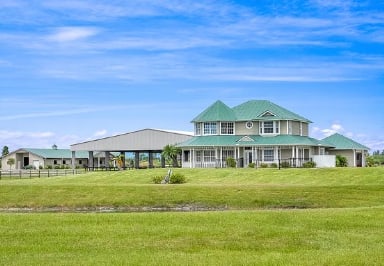 Turnkey equestrian estate
$3,950,000
4 bd · 3 ba · 2,300 sq ft · 26.51 acres
13700 SW Groveside Dr, Indiantown
A fully furnished home on 26.5 acres, about three miles from Apogee Golf Club.
Ask me about it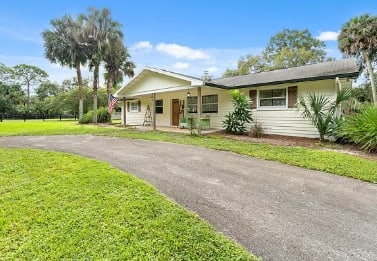 Palm City equestrian property
$1,298,000
3 bd · 2 ba · 1,467 sq ft · 5 acres
5258 SW Cherokee St, Palm City
Five acres for the horse professional, an easy drive to Wellington.
Ask me about it
Contact
Let's walk a farm together.
Tell me about your horses and how you ride. I'll tell you honestly which properties are worth seeing, and which aren't.